Complete Guide to Depigmentation Therapy with Monobenzone
Monobenzone: A Complete Guide for Vitiligo Depigmentation
Monobenzone
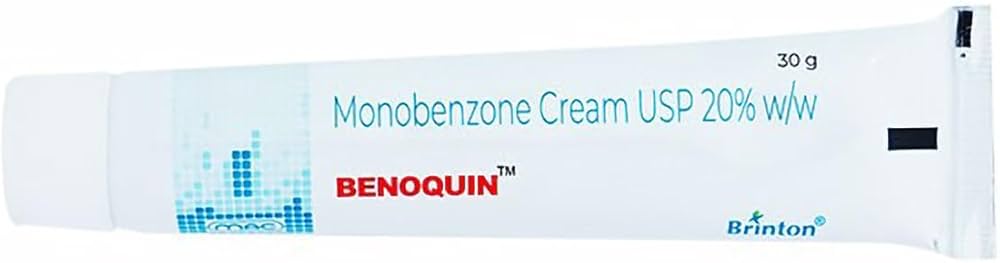
Monobenzone is a medically recognized treatment used for individuals with extensive vitiligo. Unlike typical skin-lightening products, monobenzone works by permanently removing pigment from the skin, helping patients achieve a uniform skin tone. It is commonly known under the brand name Benoquin and is widely used in dermatology for advanced depigmentation therapy.
What is Monobenzone?
Monobenzone (monobenzyl ether of hydroquinone) is a topical medication designed specifically for depigmentation. It is recommended for people whose vitiligo covers a large portion of their body, typically more than 50%. Instead of restoring pigment, it removes the remaining natural pigmentation to create an even appearance.
How Monobenzone Works
Monobenzone penetrates the skin and targets melanocytes, the cells responsible for producing pigment. It gradually destroys these cells, leading to permanent depigmentation. Over time, the treated areas become lighter until they match the already depigmented patches caused by vitiligo.
Results are not immediate. Most users begin to notice changes within a few weeks, but full depigmentation can take several months depending on skin type and consistency of use.
Who Should Use It?
- Individuals with widespread vitiligo
- Patients who have not responded to repigmentation treatments
- Those seeking a permanent and uniform skin tone
It is not recommended for cosmetic skin whitening or for people with mild vitiligo. Because the effects are irreversible, it should only be used after careful consideration or consultation with a healthcare professional.
Benefits of Monobenzone
One of the biggest advantages of monobenzone is its permanence. Unlike other treatments that offer temporary results, Monobenzone provides a long-term solution. It can significantly improve the appearance of the skin and may also help boost confidence by reducing visible contrast between affected and unaffected areas.
Side Effects and Safety
Like any medical treatment, monobenzone may cause side effects. Common reactions include mild irritation, redness, and dryness. Since it removes pigment permanently, the skin becomes more sensitive to sunlight, making daily use of sunscreen essential.
Users should apply only a thin layer to affected areas and avoid overuse. Proper guidance and consistent application are key to achieving safe and effective results.
Buying Monobenzone Online
Monobenzone is not always easily available in local pharmacies, which is why many people choose to purchase it online. When buying, it is important to ensure product authenticity, proper labeling, and secure delivery options.
Final Thoughts
Monobenzone is a powerful and effective option for those dealing with extensive vitiligo. However, it is not a casual skincare product—it is a permanent medical treatment. Understanding how it works, its benefits, and its risks is essential before starting use. With the right approach, monobenzone can help achieve a consistent and even skin tone over time.
Monobenzone: Understanding Depigmentation and Its Uses
Monobenzone is a topical depigmenting agent known for its medical use in managing extensive vitiligo. It is associated with the process of reducing the remaining natural skin pigment in selected patients who have widespread loss of pigmentation. Understanding what monobenzone is, how it works, and the precautions associated with its use is important before considering this treatment.
At Monobenzone.us, our goal is to provide accessible information about monobenzone, its medical applications, depigmentation, and related product information so visitors can make informed decisions in consultation with qualified healthcare professionals.
What Is Monobenzone?
Monobenzone, also known as monobenzyl ether of hydroquinone, is a substance that affects melanin, the pigment responsible for the natural colour of skin. It is a potent depigmenting agent used medically for the permanent depigmentation of remaining pigmented skin in certain people with extensive vitiligo.
Unlike products intended to temporarily brighten the complexion, monobenzone has a specific medical purpose. Its effects can be permanent, and its use requires careful consideration and professional medical guidance.
Monobenzone and Vitiligo
Vitiligo is a condition in which areas of the skin lose their natural pigment, resulting in white or lighter patches. The condition can affect different parts of the body and may vary considerably from one individual to another.
For some people with extensive vitiligo, the contrast between depigmented areas and the remaining normally pigmented skin can be significant. In selected cases, a dermatologist may discuss depigmentation as a management option.
Monobenzone may be considered in appropriate cases to depigment the remaining pigmented skin, with the aim of reducing the difference in colour between affected and unaffected areas. This approach is different from treatments designed to restore pigment to white patches.
How Does Monobenzone Work?
Melanin is produced by specialised skin cells called melanocytes. It plays an important role in determining skin colour and providing some natural protection against ultraviolet radiation.
Monobenzone interferes with the skin's pigmentation process and can cause lasting loss of pigment. Depigmentation develops gradually, and the extent and timing of the response may vary.
Because the loss of pigment can be irreversible and may extend beyond the areas where the product is applied, monobenzone should only be considered following an appropriate medical assessment.
Who May Be Considered for Monobenzone Treatment?
Monobenzone is associated with the management of extensive vitiligo in carefully selected patients. It is not a general-purpose skin-lightening product and is not intended for routine cosmetic whitening, freckles, melasma, or ordinary dark spots.
A qualified dermatologist can assess the extent of vitiligo, existing pigmentation, medical history, treatment expectations, and potential risks before determining whether depigmentation is appropriate.
Patients should understand that the decision involves a significant and potentially permanent change in their natural skin colour.
Important Safety Information
Monobenzone is a potent depigmenting agent and should not be used casually or without medical supervision.
Important precautions include:
- **Permanent effects:** Loss of pigmentation may be irreversible.
- **Skin reactions:** Irritation, redness, itching, or contact dermatitis may occur.
- **Sun sensitivity:** Depigmented skin has reduced natural protection from ultraviolet radiation and may be more susceptible to sunburn.
- **Pigmentation beyond the application area:** Depigmentation may occur in areas other than those directly treated.
- **Eye and sensitive-area precautions:** Avoid unintended contact with the eyes and other sensitive areas, and follow the prescribing healthcare professional's instructions.
Discuss the potential benefits, limitations, and long-term consequences with a qualified dermatologist before beginning treatment. Seek medical advice promptly if severe irritation, swelling, blistering, or other concerning reactions develop.
Understanding Monobenzone Products
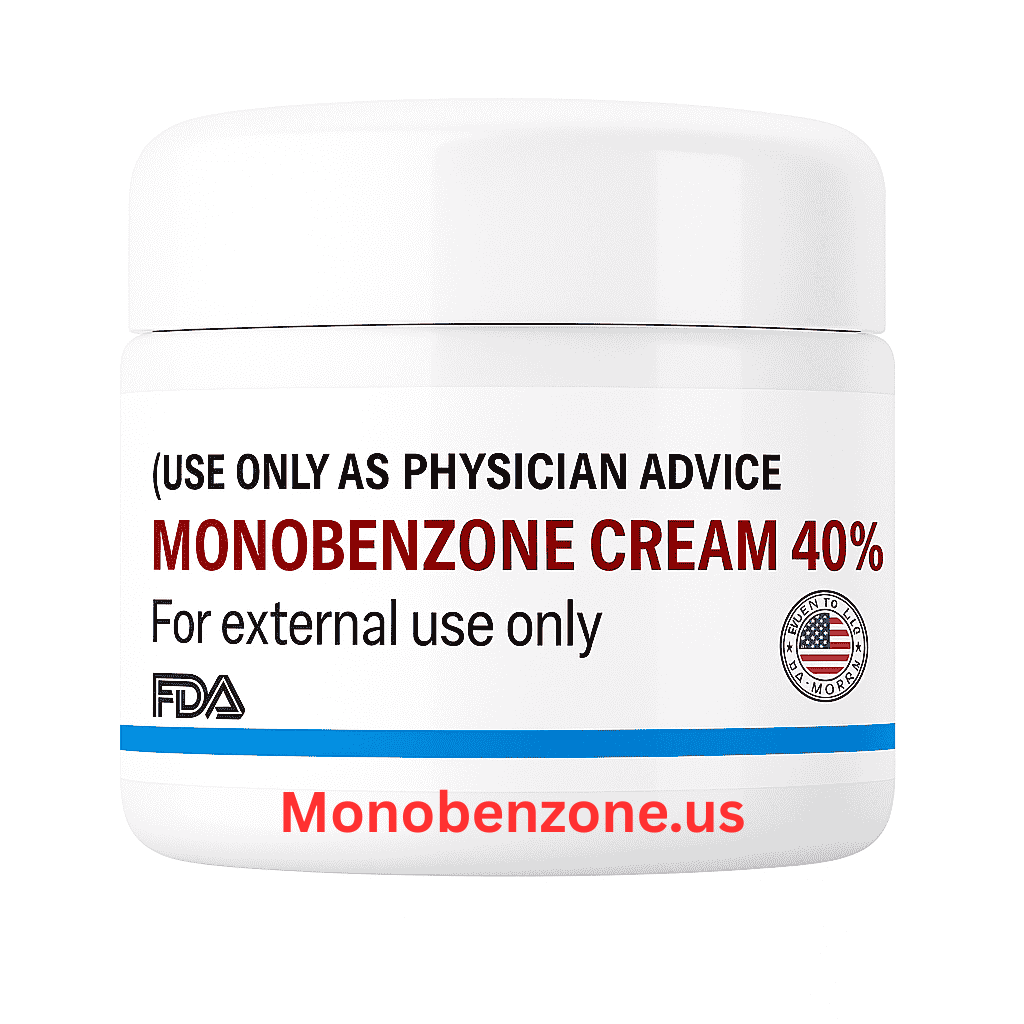
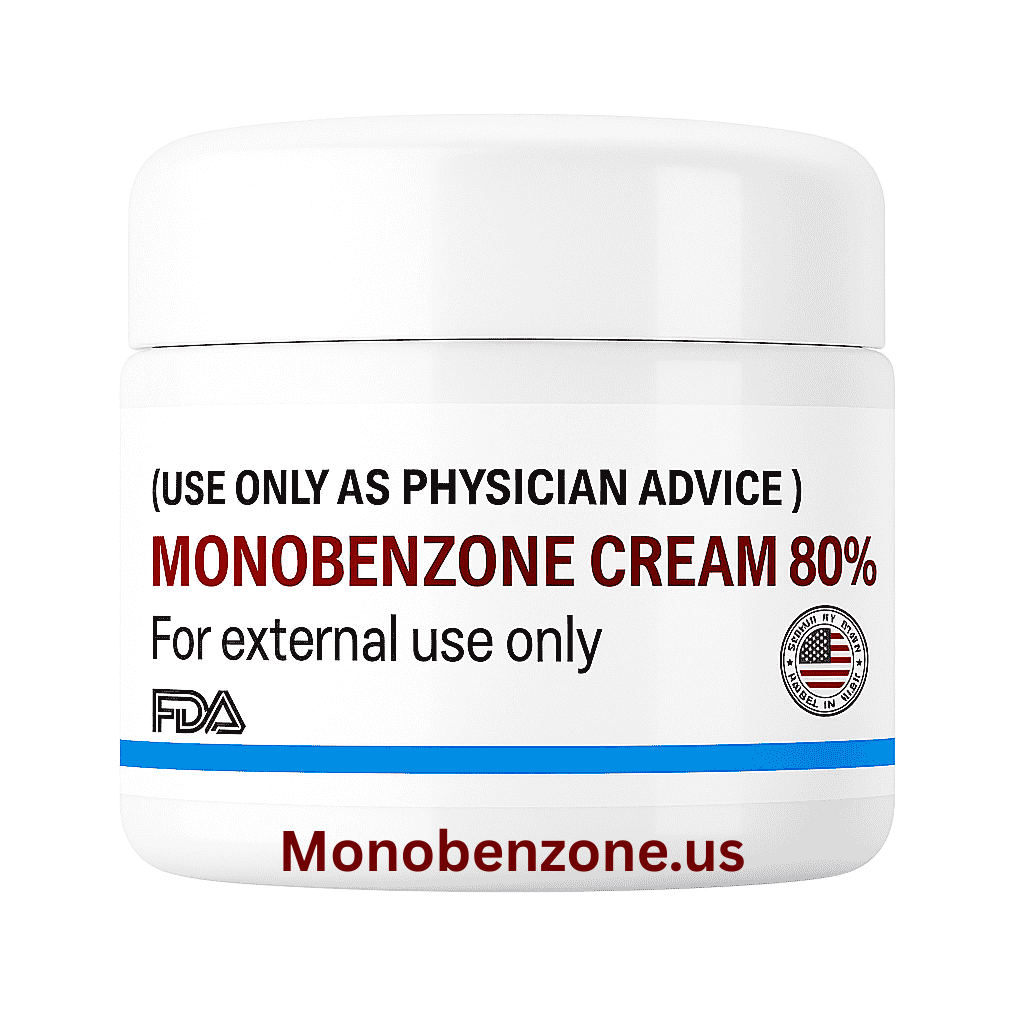
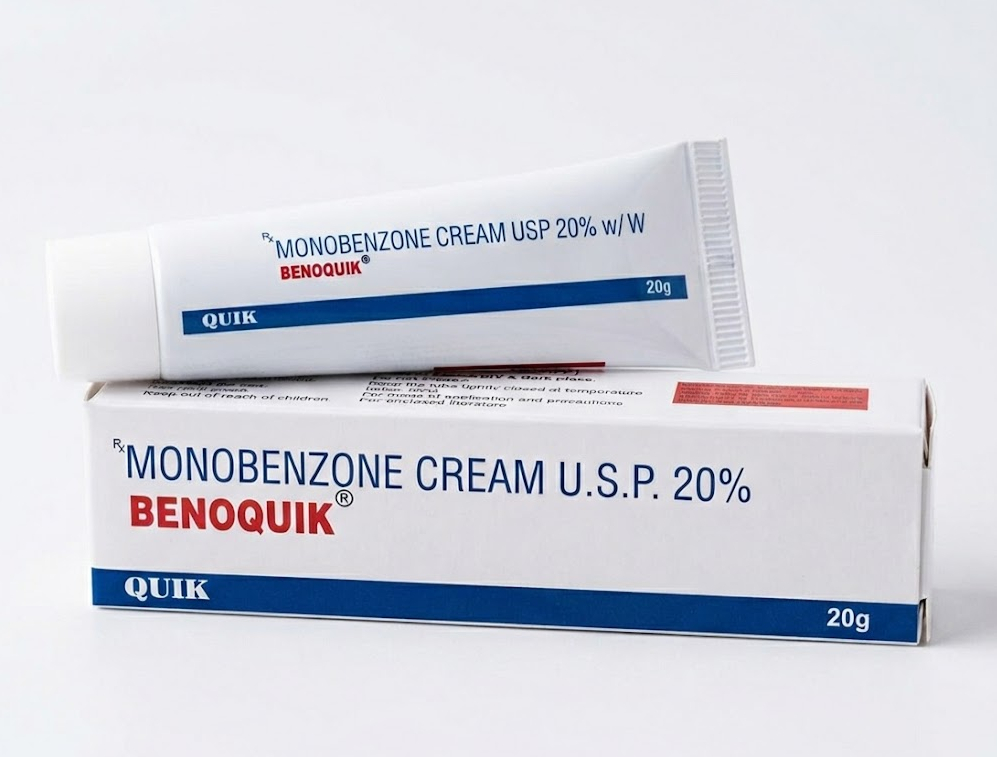
People researching monobenzone may encounter different product names, formulations, and concentrations. Product descriptions should be reviewed carefully, including the stated concentration, ingredients, manufacturer information, and directions supplied with the specific product.
The appropriate product and formulation depend on the clinical circumstances and professional advice. A higher concentration should not be assumed to be more suitable or safer for an individual.
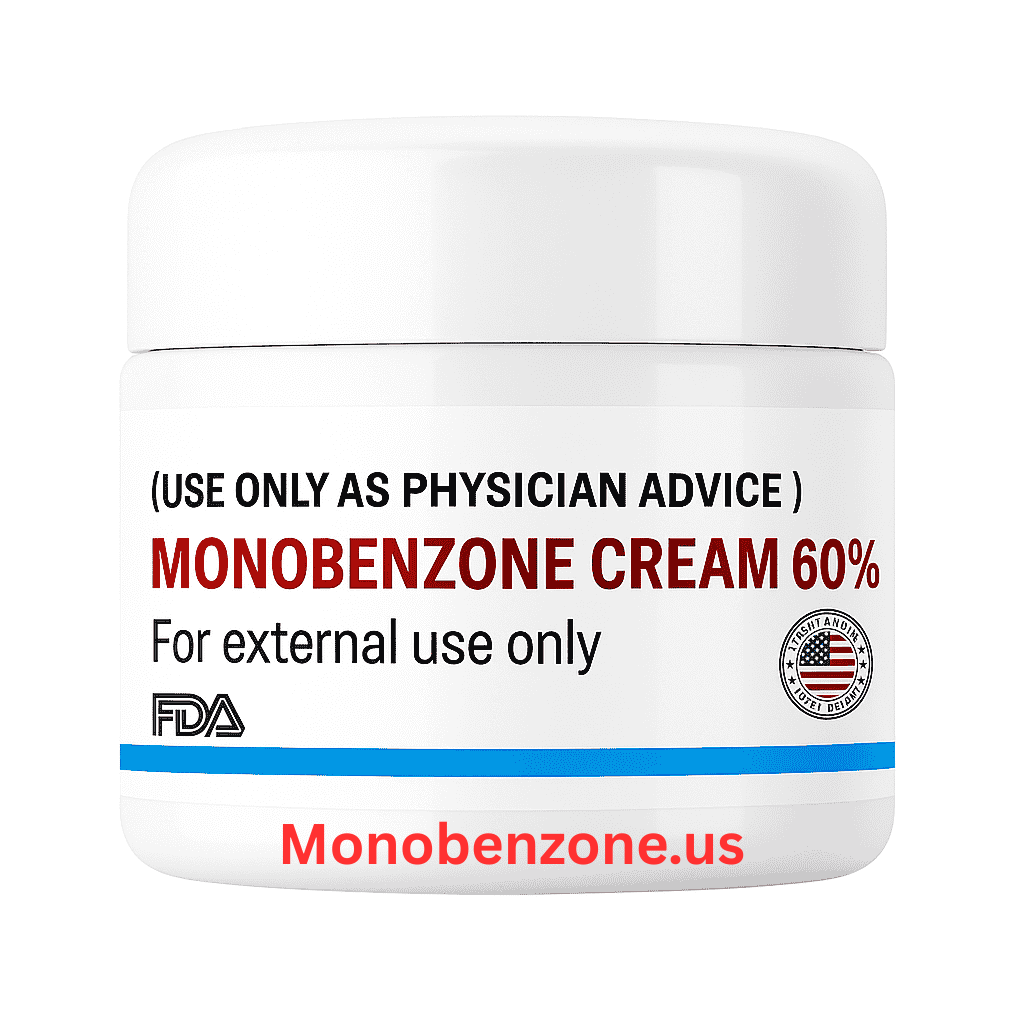
For detailed information about our listed product, including its available specifications, please visit our dedicated [Monobenzone Cream product page](/product/monobenzone-cream).
Frequently Asked Questions About Monobenzone
What is monobenzone used for?
Monobenzone is a depigmenting agent used medically for the permanent depigmentation of remaining pigmented skin in selected patients with extensive vitiligo. It is not intended as a routine cosmetic skin-whitening treatment.
Is monobenzone a treatment for restoring skin pigment?
No. Its medical role in extensive vitiligo is to reduce remaining pigmentation rather than restore colour to white patches. Other vitiligo management options aim to restore or stabilise pigmentation, depending on the individual case.
Is the effect of monobenzone permanent?
Monobenzone can cause permanent depigmentation. Anyone considering it should understand the long-term implications and discuss them with a dermatologist before use.
Can monobenzone be used for cosmetic skin whitening?
Monobenzone is not intended for general cosmetic skin whitening. Its potent and potentially irreversible effects make appropriate medical assessment essential.
Should I consult a dermatologist before using monobenzone?
Yes. A qualified dermatologist should assess whether depigmentation is appropriate, explain the potential risks, and provide individualised guidance on treatment and follow-up.
Learn More About Monobenzone
Understanding monobenzone starts with accurate information about its purpose, effects, and safety considerations. If you are researching depigmentation in the context of extensive vitiligo, speak with a qualified healthcare professional before deciding on a treatment.
Explore the information available on Monobenzone.us to learn more about monobenzone and the products listed on our website. Medical decisions should always be based on professional advice, verified product information, and a clear understanding of the potential for permanent changes in skin pigmentation.
Medical disclaimer:
This content is for general informational purposes only and is not a substitute for professional medical advice, diagnosis, or treatment.
Medical References
For additional information about vitiligo, depigmentation therapy,
and related medical considerations, please consult the following
medical resources:
Monobenzone: Uses, Depigmentation Therapy and Safety
Monobenzone, also known as monobenzyl ether of hydroquinone (MBEH), is a topical depigmenting agent associated with the medical management of extensive vitiligo. It affects melanocytes, the specialised cells responsible for producing melanin, the pigment that gives skin its natural colour.
Unlike treatments intended to restore pigmentation, monobenzone is used in selected patients to reduce the remaining natural pigmentation of the skin. This approach may be considered when vitiligo affects extensive areas of the body and a person wishes to reduce the contrast between depigmented and normally pigmented skin.
Monobenzone has a different purpose from ordinary cosmetic skin-lightening products. Its effects can be permanent, and treatment requires careful medical assessment, realistic expectations, and an understanding of the potential risks.
What Is Monobenzone?
Monobenzone is a topical depigmenting agent that affects the cells responsible for producing skin pigment. It is also known as monobenzyl ether of hydroquinone (MBEH).
Its medical use is associated with permanent depigmentation in selected patients with extensive vitiligo. It is not intended as a routine cosmetic skin-whitening product or as a treatment for ordinary dark spots.
Because its effects may be irreversible, its suitability should be assessed by a qualified healthcare professional.
Understanding Vitiligo
Vitiligo is a skin condition characterised by the loss of pigmentation, resulting in white or lighter patches. It can affect different areas of the body and may vary in extent and progression.
Vitiligo is commonly associated with autoimmune processes that affect melanocytes, the cells responsible for producing melanin. Genetic susceptibility and other biological factors may also contribute to the condition.
The condition can affect people of all skin tones. The contrast between affected and unaffected areas may be more noticeable in people with darker natural pigmentation.
Vitiligo can have physical, emotional, and social effects. Management should consider the individual's medical circumstances, treatment goals, and quality of life.
What Is Depigmentation Therapy?
Depigmentation therapy is a medical approach intended to reduce or remove the remaining natural pigment in selected patients with extensive vitiligo.
The objective is to reduce the contrast between areas that have lost pigmentation and areas that remain naturally pigmented. Although the treatment may create a more uniform overall appearance, complete uniformity cannot be guaranteed.
Depigmentation therapy is not suitable for everyone with vitiligo. Before considering this approach, patients should discuss the potential benefits, limitations, alternative treatments, and permanent nature of the expected pigment loss with a qualified dermatologist.
What Is Monobenzone Used For?
Monobenzone is associated with depigmentation therapy for selected patients with extensive vitiligo. Its purpose in this context is to reduce remaining pigmentation rather than restore colour to white patches.
The decision to consider monobenzone depends on the extent of vitiligo, the amount of natural pigmentation remaining, previous treatment outcomes, individual preferences, and potential risks.
Monobenzone should not be regarded as a general-purpose cosmetic whitening agent. Anyone considering its use should first obtain appropriate medical advice.
How Does Monobenzone Work?
Melanin is the pigment responsible for much of the skin's natural colour. It is produced by specialised cells called melanocytes.
Monobenzone affects pigment-producing cells and can cause permanent loss of pigmentation. Its effects may not be limited to the exact areas where it is applied, and depigmentation may develop in untreated areas.
The response varies between individuals and body sites. Some areas may respond differently from others, and the final result may be uneven or incomplete.
Because the effects may be irreversible, treatment requires medical supervision and a clear understanding of the possible outcomes.
Who May Be Suitable for Depigmentation Therapy?
Depigmentation therapy may be considered for selected individuals with extensive vitiligo, particularly when substantial areas of skin have already lost pigmentation.
A dermatologist may consider the following factors:
- The extent and distribution of vitiligo.
- The amount of naturally pigmented skin remaining.
- Previous treatments and their outcomes.
- The progression and activity of the condition.
- The patient's expectations and understanding of permanent pigment loss.
- Medical history, skin sensitivity, and potential contraindications.
- The ability to maintain long-term sun protection and follow-up care.
- The personal and psychological implications of a permanent skin-colour change.
A qualified dermatologist can explain whether depigmentation is appropriate or whether alternative management options may be more suitable.
Monobenzone vs. Repigmentation Treatments
Vitiligo treatments have different objectives. Some aim to stabilise the condition or encourage pigmentation to return, while depigmentation therapy aims to reduce the remaining natural pigment.
Repigmentation approaches may include topical medicines, phototherapy, and other specialist treatments. Their suitability depends on the location and extent of vitiligo, disease activity, medical history, and treatment response.
For selected patients with extensive vitiligo, depigmentation may be discussed when the objective is to reduce the contrast between affected and unaffected skin.
Monobenzone is not interchangeable with medicines intended to restore skin colour. A qualified dermatologist can explain the differences between these approaches and their potential outcomes.
Monobenzone Side Effects and Risks
Monobenzone can cause local skin reactions and unwanted changes in pigmentation. The type and severity of adverse effects can vary between individuals.
Skin irritation: Redness, dryness, itching, burning, or discomfort may occur in treated areas.
Irritant contact dermatitis: Skin inflammation may cause scaling, swelling, blistering, or other signs of irritation.
Allergic contact dermatitis: Some individuals may develop an allergic reaction. Suspected allergic reactions require medical assessment.
Unintended depigmentation: Loss of pigment may occur beyond the areas directly treated.
Uneven pigmentation: Different areas may respond differently, and the resulting colour change may be incomplete or patchy.
Other skin changes: Unexpected or persistent pigmentation changes should be evaluated by a healthcare professional.
Avoid unintended contact with the eyes and mucosal surfaces. Seek medical advice promptly if severe burning, swelling, blistering, or other significant reactions develop.
Precautions Before Using Monobenzone
Before considering monobenzone, patients should discuss their medical history, current medicines, allergies, skin condition, and treatment expectations with a qualified healthcare professional.
Important considerations include:
- Permanent changes: Depigmentation may be irreversible.
- Pregnancy and breastfeeding: Obtain specialist advice because safety information may be insufficient.
- Children: Suitability requires particular care and professional assessment.
- Skin sensitivity: Discuss existing irritation or a history of allergic reactions.
- Application precautions: Follow the instructions for the specific product and professional advice.
- Long-term follow-up: Medical review may be needed to assess results and manage adverse effects.
- Personal readiness: Consider the long-term emotional, social, and personal implications of permanent depigmentation.
Patients should not independently increase the amount, frequency, or concentration of a product to accelerate results.
Sun Protection After Depigmentation
Melanin provides some natural protection against ultraviolet radiation. Skin that has lost its pigment is more vulnerable to sunburn and ultraviolet damage.
Ongoing sun protection is important after depigmentation. General protective measures include:
- Using broad-spectrum sunscreen with a high SPF, such as SPF 50+, as appropriate for individual needs.
- Reapplying sunscreen according to its instructions, particularly after swimming or sweating.
- Wearing protective clothing and a wide-brimmed hat when appropriate.
- Seeking shade and limiting excessive exposure during periods of intense sunlight.
- Monitoring the skin for unusual changes and seeking medical advice when necessary.
A dermatologist can recommend an appropriate long-term sun-protection routine.
How Long Does Depigmentation Take?
The time required for depigmentation varies according to the individual, body site, extent of pigmentation, and response to treatment.
Results are not necessarily immediate or uniform. Some areas may respond differently from others, and certain areas may remain partially pigmented.
Medical follow-up may be necessary to evaluate the response and determine whether the treatment is achieving its intended objective.
Patients should not attempt to accelerate depigmentation by applying more product or increasing its concentration without medical advice.
Understanding Monobenzone Concentrations and Formulations
Monobenzone products may differ in concentration, formulation, ingredients, and intended use. These details should be reviewed carefully before a product is considered.
Different concentrations should not be assumed to be interchangeable. A higher concentration does not automatically mean that a product is more suitable or safer.
Patients should review the product label, ingredient information, manufacturer details, and applicable instructions. Questions about concentration and suitability should be directed to a qualified healthcare professional.
Information about an ingredient in medical literature does not establish that every product containing it has the same quality, safety profile, or regulatory status.
Other Depigmentation Approaches
Medical literature describes different approaches to depigmentation in selected cases of vitiligo. These may include topical depigmenting agents and specialist-administered procedures, such as certain laser treatments or cryotherapy for carefully selected areas.
These approaches are not equivalent and are not appropriate for every patient. Procedures may carry risks, including pain, scarring, irregular pigmentation, and recurrence of pigment.
Combination treatments described in medical literature should not be attempted without specialist supervision. A qualified dermatologist should assess the individual's condition, treatment goals, and potential risks before recommending an approach.
Psychological Considerations of Depigmentation
Vitiligo and depigmentation therapy can affect more than physical appearance. Changes in skin colour may influence confidence, relationships, social interactions, and a person's sense of identity.
Before beginning a treatment intended to permanently remove remaining pigmentation, patients should consider how they feel about the expected change and whether they understand its long-term implications.
It may be helpful to discuss concerns with a dermatologist, a counsellor familiar with skin conditions, or trusted people who can provide support.
Patients should not feel pressured to choose depigmentation or any other treatment. The decision should reflect their informed preferences and medical circumstances.
Frequently Asked Questions About Monobenzone
What Is Monobenzone Used For?
Monobenzone is a depigmenting agent associated with the permanent depigmentation of remaining pigmented skin in selected patients with extensive vitiligo.
Does Monobenzone Restore Skin Pigmentation?
No. Monobenzone is used to reduce pigmentation rather than restore colour to white patches. Other vitiligo treatments may aim to encourage repigmentation.
Can Monobenzone Cause Permanent Depigmentation?
Yes. Monobenzone can cause irreversible loss of pigment. Anyone considering treatment should understand the long-term implications and seek professional medical advice.
Can Depigmentation Occur Outside Treated Areas?
Yes. Unintended loss of pigment may occur beyond the areas where the product is applied. This possibility should be discussed with a healthcare professional before treatment.
What Are the Possible Side Effects of Monobenzone?
Possible adverse effects include irritation, redness, dryness, burning, itching, and contact dermatitis. Unwanted pigmentation changes may also occur.
Why Is Sun Protection Important After Depigmentation?
Depigmented skin has reduced natural protection against ultraviolet radiation and is more susceptible to sunburn and ultraviolet damage. Long-term sun protection is important.
Is Monobenzone Suitable for Everyone With Vitiligo?
No. Depigmentation therapy is considered only in selected circumstances, particularly extensive vitiligo. A dermatologist should assess suitability and explain alternative options.
Should a Dermatologist Be Consulted Before Use?
Yes. A qualified dermatologist can explain the potential risks, expected outcomes, and long-term implications of depigmentation therapy.
Does Every Monobenzone Product Have the Same Regulatory Status?
No. Regulatory status depends on the specific product, formulation, concentration, jurisdiction, and intended indication. Claims about approval should be verified with the relevant official regulatory authority.
Medical References
The following independent medical resources provide further information about vitiligo, depigmentation therapy, clinical management, and safety considerations.
Learn More About Monobenzone
Understanding monobenzone requires careful consideration of its medical purpose, potential effects, and long-term safety implications. For individuals researching depigmentation in the context of extensive vitiligo, reliable medical information and professional guidance are essential before making a treatment decision.
Explore Monobenzone.us for additional information about monobenzone and the products listed on our website. Always review product information carefully and consult a qualified healthcare professional regarding medical suitability, potential risks, and appropriate care.
Medical Disclaimer
This article is provided for general educational and informational purposes only. It does not constitute medical advice and is not a substitute for professional diagnosis, treatment, or consultation. Medical information may change as new evidence becomes available. Consult a qualified healthcare professional before considering monobenzone or any depigmentation therapy.




 85%
85%
 17%
17%